



IN THIS ARTICLE
- What is a serum?
- How do serums benefit my skin?
- What are the different types of serums and which one(s) should I use?
- How do I use serums in my skincare routine?
- How long do I have to use a serum before seeing the results?
- A breakdown of our Serum Luxe duo
- Final words about skincare serums
Serums. Serums. Serums.
You’ve probably heard about them. You vaguely know what they do, and that they can take your skincare routine to the next level. You might even own one or two bottles of serum yourself. And if you don’t, then surely your mom or your friends do.


The point is, serums are a staple in many people’s skincare routines.
However, just because you might know of them, doesn’t mean that you truly know them and what their purposes are. So if you’re a skincare beginner, or just someone who’s looking to learn a bit more about skincare serums, then this article is for you.
What is a serum?
Basically, a serum is a skincare product that contains an optimal amount of an active ingredient, or more commonly, multiple active ingredients that are formulated to work together.
In case the term active ingredient is unfamiliar to you, worry not!
Basically, active ingredients, or actives, are skincare ingredients that work to address specific skin concerns that a product is supposed to help with. These ingredients tend to have a lot of scientific studies and research behind them, proving that they are able to alter the skin’s appearance in positive, meaningful ways. And yes, if you were wondering, there’s such a thing as inactive ingredients as well. They’re ingredients that aid in the overall formulation of a skincare product and help to stabilize them.
A good serum is one that’s formulated properly, achieving a balance between active ingredients and inactive ingredients. This results in a final product that’s not only helpful and efficacious, but also feels elegant on your skin.
Most often, serums are clear, gel-based or slightly liquidy. However, advancements in the skincare space have allowed chemists and formulators to create cream and oil-based serums, as well.

How do serums benefit my skin?

Think of it this way: A serum could be your BFF in the fight against skin issues like hyperpigmentation, dullness, dryness, fine lines, wrinkles, acne and more.
However, not all serums are created equal.
Why, you ask? Well, that’s all because of the active ingredients we just talked about.
Basically, there are many, many active ingredients out there—all of which have their own unique properties and effects on your skin. Depending on the skin concerns you’re trying to treat, a product could include one or more types of actives to treat those concerns.
For example, if you’re looking to treat acne or breakouts, look for products that contain salicylic acid or sulphur. Or if you’re looking to prevent your skin from aging prematurely, look for products with retinoids and antioxidants.
What are the different types of serums and which one(s) should I use?
There are so many types of serums out there. Choosing the right one(s) can be overwhelming.
To start, know your skin type and assess your skin needs. Are there post-acne dark spots you’re looking to fade? Do you have dry patches that need a boost of moisture? Or perhaps you’re hoping to brighten and even out your overall complexion? Listening to your skin is key! Don't forget to consider any ingredient allergies you may have.

Assessing your skin needs will give you a pretty good idea of the type of serum(s) you’ll want to consider adding to your skincare routine.
Now it’s time to do some serum shopping!
Basically, there are four common types of serums:
Anti-aging serum
Or graceful-aging serum, as we prefer to call it at Graydon Skincare. This is the type of serum to use if you’re looking to prevent premature signs of aging and help your skin age as gracefully as possible. These serums typically contain ingredients like retinoids, vitamin A derivatives, which are shown to improve skin elasticity and the look of fine lines and wrinkles.
You may think that only people who are more mature need to use this type of serum. But nope! The fact is that just about anyone will benefit from a graceful-aging serum. You may even start using one as early as your mid-20s.
Antioxidant serum
This type of serum helps to protect your skin against free radicals that you come into contact with daily. Free radicals are unstable molecules that can damage your cells, leading to premature aging. Some ingredients with antioxidant properties are vitamin C and green tea.
Since skin-damaging free radicals are things that all of us encounter on a daily basis, it’s important to protect your skin against them. As such, everyone can benefit from adding an antioxidant serum into their routine.
Hydrating serum
As the name suggests, this type of serum works to increase hydration to your skin. Most likely, this serum contains humectant ingredients, such as glycerin, aloe vera and hyaluronic acid, to draw water from the environment into your skin, keeping it plump and supple.
First and foremost, this type of serum is extremely beneficial for those who have dehydrated skin, or are suffering from impaired barrier function, and need to increase the water content in their skin. However, since hydrated skin equals bouncy, supple, happy skin, people with other skin types can also benefit from certain hydrating serums as well.
Colour-correcting serum
This type of serum helps to even out your overall complexion and improve skin hyperpigmentation. Some ingredients you should look into are niacinamide, kojic acid, azelaic acid and vitamin C.
If you’re dealing with post-acne hyperpigmentation, the aftermath of a breakout or acne, then you know it can take months for the marks to fade away. This type of serum can help reduce that amount of time to weeks. Also, if you’re dealing with a skin condition like melasma (AKA: the mask of pregnancy), then using a colour-correcting serum can also assist in keeping the condition at bay.
Those are the four most common types of serums that are currently on the market.
With that being said, the skincare world has come a long way. Nowadays, a serum can be formulated with multiple efficacious active ingredients, helping you target multiple skin conditions at the same time. Plus, there are many superstar multi-functional actives, like niacinamide, that can do a wide variety of things, such as regulating sebum production, minimizing the appearance of pores, plus having brightening, antioxidant, and anti-inflammatory properties. And that’s exactly what we’ve been able to achieve with Fullmoon Serum and Moon Boost Serum.
Long gone are the days of needing 13 different serums in the same routine and trying to figure out the specific order to use them.
How do I use serums in my skincare routine?
While using a serum might seem natural to you, there’s something you need to do before officially using it: Patch testing.
Essentially, patch testing is a process to determine if your skin is allergic to a product. To be more precise, you're testing your skin’s immune system to see if it will react negatively to a skincare product. For many of us, this might not be necessary. However, the chances of a negative reaction, no matter how small, are still there. This is why I always recommend that Graydon Skincare supporters do a patch test before officially using any new products.
Here’s how to do a patch test at home: Simply apply a small amount of the serum or cream to the jawline/neck area. Wait up to 48 hours. Don’t forget to observe that skin area for any reactions. If you don’t see any redness, feel itchy or uncomfortable, then you’re good to go! If not, simply rinse that area with cool water and apply your normal moisturizer.
Now that the patch test is out of the way, let’s get to the fun part: Applying your serums!
Generally, I recommend using a serum all over your face and neck. You really don’t need to use a lot for it to be effective. Depending on your needs and the types of serum you use, you can use them once or twice a day—once in your daytime routine and once in your nighttime routine.
Always make sure to rinse or cleanse your face before applying your serum(s). Generally, a serum is applied after your toner, but before your moisturizer and oil. However, in some cases, some people may benefit from applying their serums after the moisturizer step as well.
When in doubt, always follow the instructions!
How long do I have to use a serum before seeing the results?
Patience is a virtue. This is especially true when you’re trying out a new skincare product.
It may take a while for you to see any noticeable changes in your skin. As a rule of thumb, I always recommend giving your new skincare products about 1–1.5 months before making a decision to switch or keep going. This is because, on average, it takes your skin roughly 28–40 days to create new skin cells. These new skin cells reflect the effects that your skincare products have on your skin. And so, you can only truly observe changes after that.
That being said, products and skincare ingredients are not equal. They all work a bit differently from each other, depending on several factors.
For example, if your goal is to increase hydration in your skin, then it only takes about 5–15 minutes for a hyaluronic acid serum to show its effects. However, if you’re using a retinoid serum, hoping to decrease the appearance of fine lines and wrinkles, then you can expect to wait around 12–24 weeks before seeing any noticeable results. Another example is if you’re looking to improve your hyperpigmentation by using an azelaic acid product, then you can expect changes around 16 weeks.
A Breakdown of our Serum Luxe duo
At Graydon Skincare, our ethos is to create plant-powered, multi-active skincare products that give you the most bang for your buck.
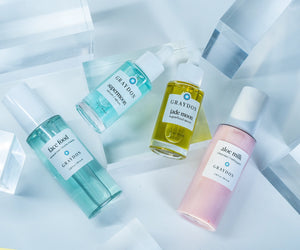
Our Fullmoon Serum and Moon Boost Serum, AKA: the Serum Luxe duo, work synergistically to address a plethora of skin concerns and help your skin to look and feel its best.
Knowing how confusing skincare can be, especially for beginners, we formulated both of these serums with multiple active ingredients to help you target a wide range of skin issues. My vision was to create plant-powered products that are efficacious and easy-to-use.
Combining these two serums creates a dream team. But they shine as individuals too.
Fullmoon Serum is an ultra-lightweight, water-based serum that hydrates, corrects and protects the skin. It's formulated with a plethora of superfood ingredients, such as moringa, blue tansy, bio retinol from moth bean extract and more.

Thanks to this phyto complex, the serum addresses a multitude of skin concerns including fine lines and wrinkles, redness, dehydration, weakened skin barrier and dull complexion.
Moon Boost Serum is a velvety-smooth, oil-based serum that nourishes and strengthens your skin. It's blended with seven vitamins from superfood oils and extracts, including raspberry seed oil, blueberry seed oil, prickly pear seed oil and more.

Its luxurious formula also acts as an occlusive barrier to slow transepidermal water loss. This makes it the perfect second serum to use after Fullmoon Serum because it locks in all the hydration and actives, ensuring that they perform to the best of their abilities.
Final words about skincare serums
Serums are the pinnacle of any skincare routine.
A good serum is often formulated with different active ingredients to help you target a multitude of skin concerns. That being said, serums all work differently from each other. That’s why you need to understand your own skin and pick the ones most suitable for you.
If you want to simplify your routine, or take the guesswork out of choosing a serum, give our Serum Luxe duo a try! ❤️
__________________
Omega-3s are essential fatty acids that your body needs, but what are the omega-3 benefits when it comes to skincare? Click here to find out!
